ServicesWell Water Treatment
Well Water Treatment in Baytown
Orange stains, a rotten egg smell or cloudy water from your well all have a cause. We test first, find out what is in the water, and put in only the equipment that fixes it. No guessing, no extra tanks you do not need.
Well Water Needs Its Own Plan
City water is treated before it reaches you. Well water is not. What comes out of your tap depends on the ground under your property, the depth of the well and the shape the well itself is in. Two homes a mile apart can have very different water.
That is why we do not show up with a standard package. Iron, manganese, hydrogen sulfide, hardness, sediment and bacteria each need a different fix. A softener will not kill bacteria. A UV light will not take out iron. Pick the wrong one and you pay for equipment while the problem stays.
We have been in business 13 years, and most well problems we see come down to one or two specific things. Our job is to find them, explain them in plain words and treat them.
What Our Well Water Service Covers
Testing at the source
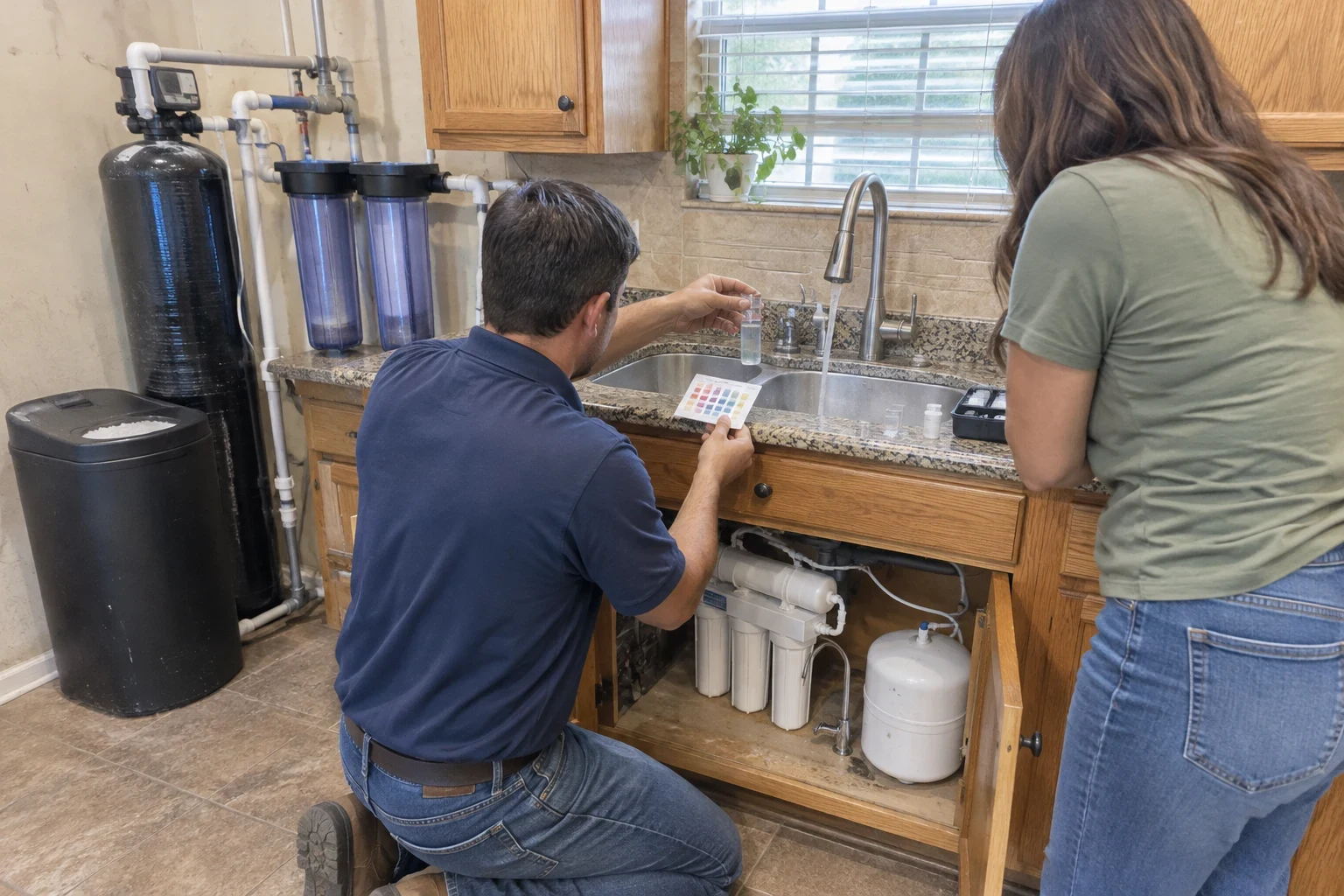
We check the water for iron, manganese, hardness, pH, sulfur smell and sediment. When bacteria is a concern, we take a sample for lab testing. You get the numbers, not just a sales pitch.
Iron and sulfur removal
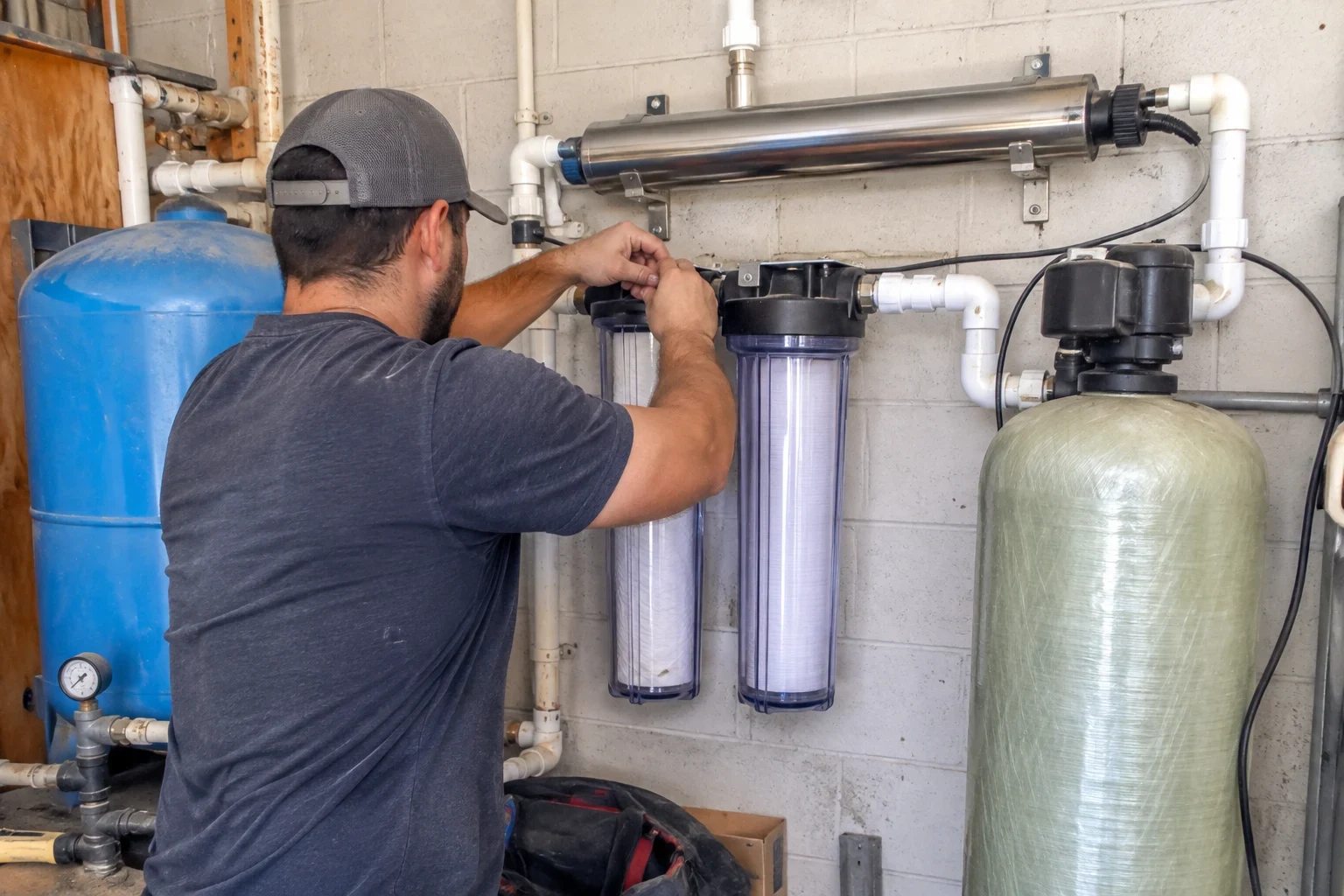
For staining and rotten egg odor we use oxidizing filters that turn dissolved iron and sulfur into particles the media can catch and backwash away. Sizing depends on your levels and your flow rate.
Bacteria control
If testing shows coliform or other bacteria, we look at the well cap and seal first, then add UV disinfection or chlorination where it is needed.
Sediment filtration
Sand and grit wear out valves, fixtures and appliances. A sediment filter ahead of other equipment protects everything downstream.
Add-ons only when the test supports them
Some wells also need a softener or a reverse osmosis system at the kitchen sink. We recommend those only if your results call for them.
Full services after the sale
We stay on the job after installation. Filter changes, media service and adjustments are part of how we work with well owners.
What Your Well Water Might Be Telling You
- Rust rings and stained laundry
- Reddish marks in the toilet bowl, the sink or on white clothes are usually iron. Dark or black streaks tend to mean manganese.
- A sulfur odor at the tap
- The rotten egg smell is a gas dissolved in the water. If you only notice it on the hot side, the water heater may be causing it. We look at that first and will tell you straight if a filter will not help.
- Murky water or grit in the glass
- Fine sand, silt or haze can start in the well or at the pump. We find where it comes from before choosing a filter.
- Water that tastes like metal
- Iron, low pH and other minerals all change the taste. You often notice it first in coffee or tea.
- It has been over a year since a test
- A private well is yours to look after. Bacteria and nitrates have no color or smell, so only a test will show them.
- Standing water near the wellhead
- Heavy Gulf Coast rain and storms can push surface water toward a well. If yours sat near flooding, get it tested before anyone drinks from it.
How a Well Water Job Goes
- 1
Phone conversation
You tell us what you are seeing, smelling or tasting. We ask about the well, the house and any past treatment so we know what to look for.
- 2
Test and inspect
We sample the water and look over the wellhead, pressure tank and existing equipment. Lab results for bacteria take a few days.
- 3
Walk through the results
We show you what was found and what each number means. Then we explain which equipment fixes it, and which equipment you do not need.
- 4
Installation
Equipment usually goes near the pressure tank, in the garage or a well house. We protect the work area, plumb in bypass valves so you can service the system, and clean up when we are done.
- 5
Check the results
After the system runs, we retest to confirm the problem is gone and set up a service schedule that fits your water.
What Moves the Price
Every well is different, so we price the job after we know what is in the water. You get a written breakdown of the equipment and labor before any work starts. Free installation is one of our offers, so most of the cost is the equipment itself.
- What the test finds
- One issue, like sediment, needs one filter. Iron, sulfur and bacteria together need a multi-stage setup.
- Contaminant levels
- Higher iron or sulfur means larger tanks or stronger oxidation. Light levels can be handled with smaller equipment.
- Flow rate and household size
- Equipment has to keep up with your well pump and how much water your home uses at once. Undersized systems let problems slip through.
- Space and plumbing
- Tight spaces, old piping or a well house that needs electrical work can add time and materials.
Common Questions From Well Owners
- Why test the water before you suggest any equipment?
- Because a guess can cost you a tank that does nothing. Iron, sulfur and bacteria often travel together, and each one changes which equipment will actually work. A test tells us what we are treating, so the fix is right the first time.
- How often does a private well need testing?
- Test for bacteria at least once a year. Test again whenever the water changes in taste, smell or color. A new sample also makes sense after a flood, after any work on the well or pump, and before a baby comes home.
- The rotten egg smell is only in my hot water. Is a filter the answer?
- Not always. Sulfate in the water can react with the anode rod in your water heater and cause that odor. We check for that first, because replacing an anode rod costs much less than a full treatment system.
- Will a treatment system cut my water pressure?
- Not if it is sized right for your well. A noticeable drop usually comes from filters that are too small or media that has clogged. We size the equipment to your pump and flow rate, and regular service keeps the water moving.
- What warranty comes with a well water system?
- The well water systems we install come with a lifetime warranty. We will go over exactly what it covers on the phone, before any equipment goes in.
- Do you work on wells outside Baytown?
- We do. We serve well owners in Baytown and nearby places like Highlands, Barrett and Mont Belvieu. Give us a ring, tell us where the well is, and we will confirm we can reach you.
Find Out What Is in Your Well
Tell us what your water is doing and we will explain the next step. Testing comes first, then a fix that matches the results.