ServicesReverse Osmosis
Reverse Osmosis in Baytown
An RO system puts clean water for drinking, coffee and cooking on its own tap beside your main faucet. Before we recommend one, we check what is in your water, so the filters and membrane match it and the system keeps working the way it should.
What a Reverse Osmosis System Does
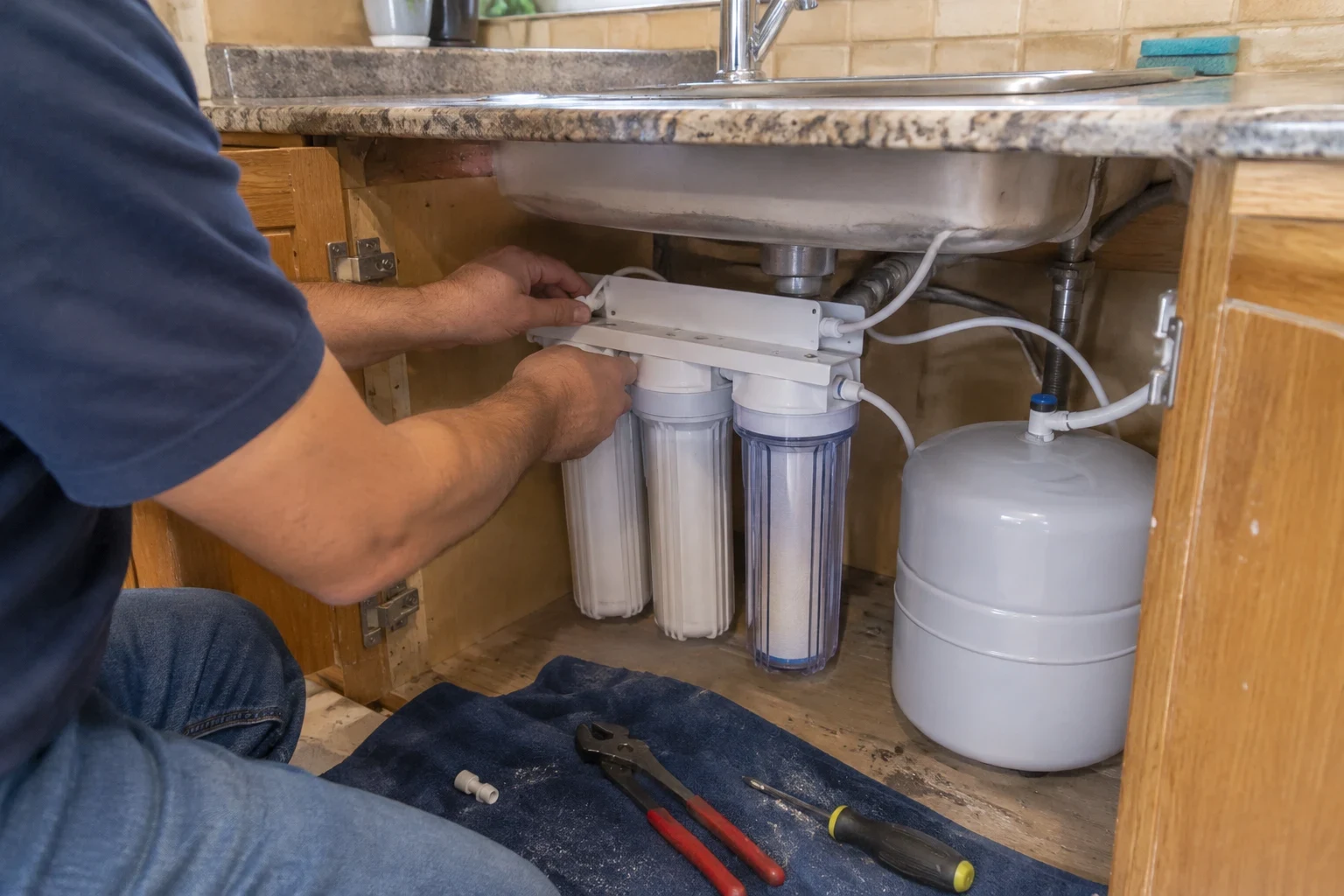
An RO system fits in the cabinet under your kitchen sink. Water runs through a sediment filter, then carbon, then a very tight membrane that stops most dissolved solids. That takes out things like lead from old pipes, nitrates, fluoride and a lot of trace chemicals. The clean water fills a small tank and runs to a faucet of its own.
It only treats the water at that one tap. If the problem is a bleach smell when you bathe or hard white spots across the house, Whole-Home Filtration or a Water Softener is probably the better fix. We would rather say so now than put in something that misses the problem.
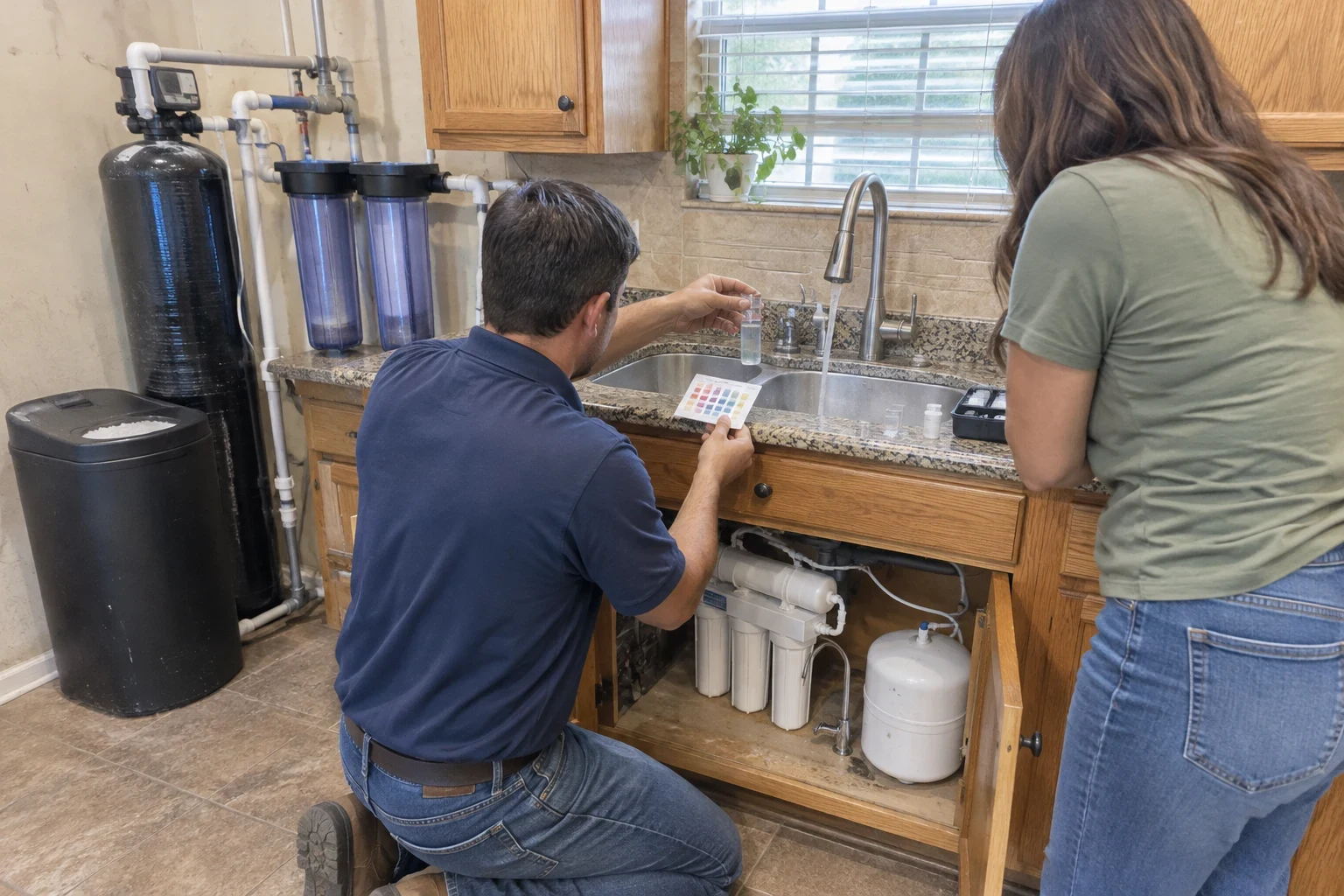
So we test first. Hardness, chlorine and total dissolved solids all change how an RO system should be built and how often its filters wear out. In business 13 years, we have learned the right setup starts with real numbers from your tap.
What Comes With Your RO Install
- 01
Water test before we quote
We measure hardness, chlorine and dissolved solids from your tap. Those numbers pick the prefilters and tell us if anything needs to go in ahead of the system.
- 02
Free installation
Free installation comes with every system we sell. That covers hanging the filter canisters and storage tank in the cabinet, connecting to your cold water supply, running the drain line and putting in the faucet.
- 03
Its own drinking faucet
The RO water comes out of a separate small faucet. If your sink already has an unused sprayer or soap hole, we can usually put it there and skip drilling.
- 04
Line to the refrigerator
Want RO water from the fridge door too? We can tee off the tank and run tubing to the refrigerator. The ice comes out clearer and tastes cleaner.
- 05
Full services after the sale
The job does not end when we pack up. Call us for filter changes, a pressure check or a question about how the water tastes.
- 06
Coverage that lasts
Every system we install carries a lifetime warranty. On the phone we can go over what it covers for the model you choose.
Questions about Reverse Osmosis?
Call(281) 399-4239Signs Reverse Osmosis Makes Sense for You
You buy cases of bottled water
If the family will not drink from the tap, an RO faucet usually ends the grocery runs for water. It is also less to haul and store.
Your home has older plumbing
Older homes can have lead solder or brass fittings in the lines. RO is one of the better ways to deal with lead at the tap where you drink.
Coffee and tea taste off
A flat or metallic taste in coffee often comes from dissolved minerals and chlorine. RO water brews cleaner.
Cloudy ice or crusty kettle
White buildup in the kettle and cloudy ice point to dissolved solids. A test tells us how high they run.
You are on a private well
Wells can carry nitrates or other dissolved contaminants the city water does not. RO is often the final step after Well Water Treatment handles iron and sediment.
How the Work Goes
- 1
First call
Tell us what you notice about your water and what your kitchen sink looks like. We pick a day and time that works for you.
- 2
Testing and a look at the cabinet
On the visit we test your water and check the space, the shutoff valve and the drain. You hear what we found and get our recommendation in writing before anything goes in.
- 3
Install day
Most jobs take a few hours. We tap the cold line, connect the drain, set the tank and faucet, then flush the new filters so your first glass tastes clean. The cabinet gets wiped out before we leave.
- 4
Walkthrough
We show you how to check the tank, when filters come due and where to shut the system off. You keep our number for anything after that.
What Moves the Price
Installation is free, so your price mostly comes down to the equipment and what your water calls for. You get the full number after we test, before any work starts. That way nothing new shows up on the bill once we are under the sink.
- How many stages
- Each added stage adds cost. A simple setup with prefilters, membrane and a final carbon filter is the starting point. Adding a stage that puts minerals back raises the price a bit, and that stage ties in with our Alkaline Water Systems.
- Tank vs. tankless
- A tankless unit takes up less room under the sink and makes water as you use it. It runs higher up front than a system with a storage tank.
- What your water carries
- High hardness or strong chlorine shortens membrane life. When the test shows either one, a pretreatment step may be worth it so the system holds up.
- Line pressure
- RO needs decent pressure to work well. Low pressure can mean adding a booster pump, and we tell you that before we start.
- Extra runs
- Sending water to the refrigerator or a second sink takes more tubing and fittings. A long run under floors or through cabinets adds time too.
Reverse Osmosis Questions
Does reverse osmosis waste water?
Some, yes. The membrane rinses what it catches down the drain, and that rinse is how it keeps working. Newer systems send less water to the drain than older ones. A booster pump can help when pressure is low. We will tell you what to expect for your setup.
Does RO strip out the good minerals too?
Mostly, yes. The membrane cannot pick and choose, so calcium and magnesium go out with the stuff you want gone. Plenty of people are happy with the taste as is. If you want some minerals back, a final remineralizing stage handles that.
How often do the filters need changing?
Prefilters usually last six to twelve months. The membrane goes a few years. Your water sets the actual schedule, and we give you the dates at the walkthrough. When they come due, give us a call.
Can RO treat all the water in my house?
Not in a practical way. An under-sink unit is made for the water you drink and cook with. For showers, laundry and every other tap, Whole-Home Filtration is the better tool, and the two pair up well.
What if my water does not need RO?
Then we tell you. Sometimes a plain carbon filter clears up a taste issue for less. The test points the way, and you only pay for what fixes the problem.
Find Out What Your Tap Water Needs
Tell us what you are tasting or worried about, and we will set up a time to test your water. We work in Baytown and nearby towns like La Porte, Mont Belvieu and Highlands.