ServicesWater Testing
Water Testing in Baytown
A filter only helps if it matches the problem. We test the water at your tap, show you every reading and tell you plainly what it points to. Some homes need a system. Some do not. Either way, you know before you spend a dollar.
Know what is in your water first
Spots on glasses, a smell from the shower, orange rings in the tub. Each one has a different cause, and each cause needs a different fix. A softener will not take out chlorine. A carbon filter will not stop scale. Guessing is how people end up paying for equipment that misses the problem.
So we start with a test. We check what drives most complaints in your home: hardness, iron, chlorine, pH and total dissolved solids. If something needs a closer look, like lead from old pipes or bacteria in a private well, we take a sample for a lab.
We have been in business 13 years, testing water in Baytown and towns like La Porte, Mont Belvieu and Highlands. Sometimes the readings show your water is fine as it is. When that happens, we say so and leave it there.
What a visit covers
- Hardness
- Calcium and magnesium are the minerals that leave scale behind. Their level tells us if a water softener would earn its place in your home or just sit there taking up space.
- Iron and manganese
- These cause the rust-colored marks on fixtures and laundry. Wells are the usual source, though older pipes can add iron too.
- Chlorine
- Utilities add a disinfectant to city water, and that is a good thing. It can still leave a pool smell or a flat taste. Knowing the level tells us if a carbon filter would make a difference.
- pH and total dissolved solids
- Water with low pH can slowly wear down copper pipe. A high dissolved solids number means plenty of mineral or salt, which changes the taste and the kind of system that fits.
- Lab samples when the sink can't tell us
- Some things do not show up on a field test. For lead, bacteria or a full well panel, we fill the bottles properly and send them to an outside testing lab.
- Every number explained
- We sit down and go over each reading with you. You keep a written copy and get an honest read on what matters and what can be ignored.
When your water deserves a closer look
Chalky buildup on fixtures
That white crust on faucets and shower heads is mineral scale. The same buildup collects inside your water heater, out of sight.
Orange or brown marks
Rings in the toilet bowl or tub usually come from iron. Testing shows how much is there and if it starts in the water or the pipes.
An off taste or odor
A bleach smell points to chlorine. A rotten egg smell often means hydrogen sulfide, a common well issue. The two call for different fixes.
Your home runs on a private well
No one checks a private well but you. A yearly test, plus one after flooding or repairs, catches changes early.
Older plumbing in the house
Older homes may have lead solder or galvanized pipe. With young kids or a baby on the way, a lead test is worth doing.
How the test works
- 1
We talk on the phone
You tell us what you are seeing, smelling or tasting. We ask if you are on city water or a well, and how old the plumbing is. That tells us what to bring.
- 2
We test at your tap
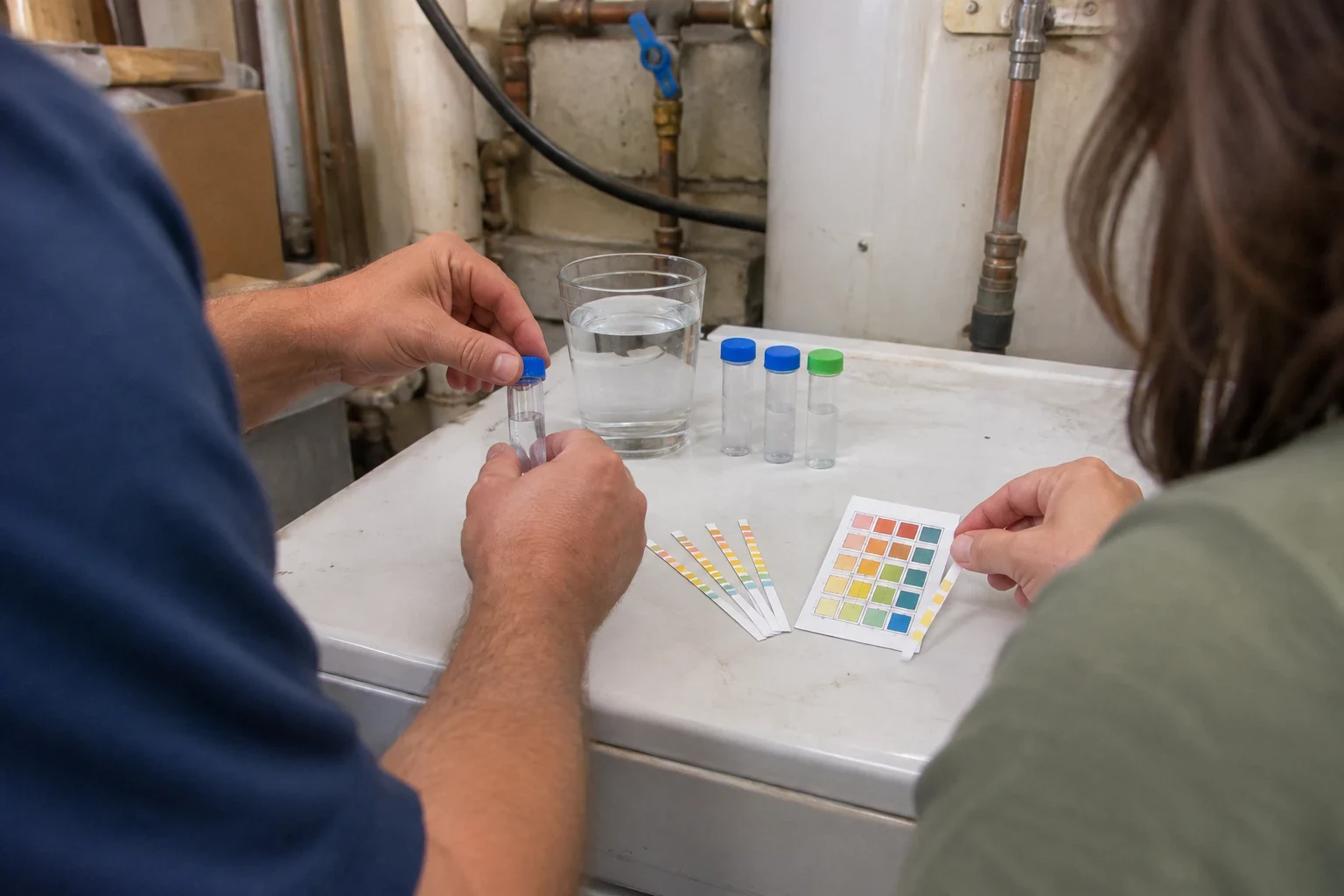
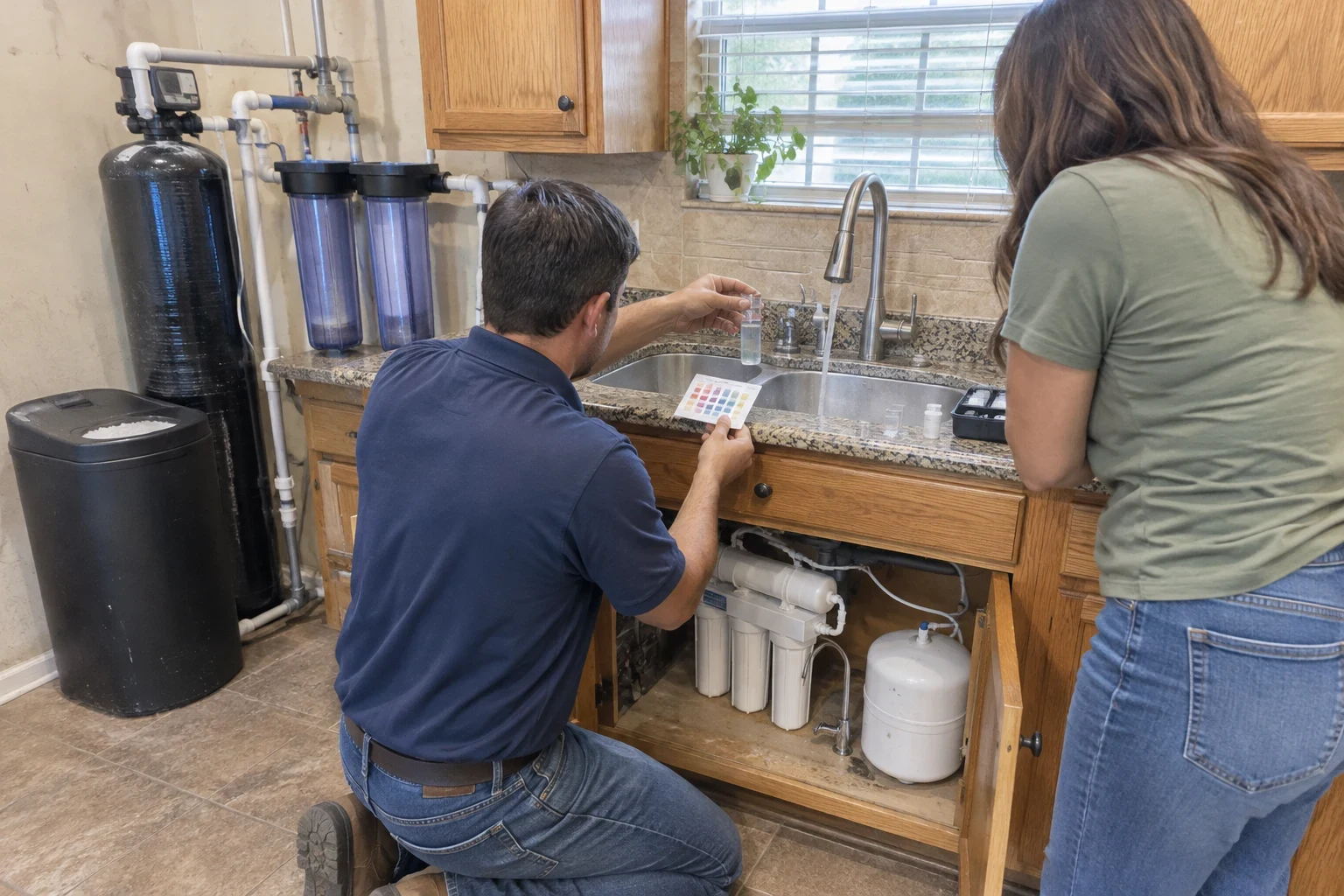
We run the water and test it right there in your kitchen. You are welcome to watch. Most basic readings come up while we are still at the sink.
- 3
Lab samples go out if needed
If a reading needs a lab, we fill the sample bottles and ship them. When results come back, we call and walk you through them.
- 4
You get a straight answer
We tell you what the numbers point to and what, if anything, would fix it. If a system makes sense, we explain why that one and not another. There is no pressure to buy.
What sets the price of testing
Most visits start with readings we take at the sink, and those handle the usual complaints. Lab work or a longer list of items adds to the cost. We go over the price with you on the phone before anyone drives out.
- Sink readings or lab work
- Readings we take on site cost less than samples mailed to an outside lab. Some things, like lead and bacteria, can only be measured at a lab.
- The length of the list
- Checking just hardness and chlorine is a short job. A full panel takes longer. We suggest only the tests that fit what you are seeing.
- Well or city supply
- A private well usually needs a wider test because no utility is watching that water. More items on the list means more cost.
- A second visit later
- Some people want a retest after a system goes in so they can see the change. That is booked as its own visit.
Water testing questions
Something not covered here? (281) 399-4239
My city water is already treated. Why test it?
City water meets safety rules when it leaves the plant. After that it travels through the mains and then through your own plumbing. A test shows what actually comes out of your tap, not just what left the plant.
Do I need a test before buying a filter or softener?
We think so. The test tells us which system will fix your problem and which ones will not. It also keeps you from paying for more equipment than you need.
How often should I test a private well?
Once a year is a good rule. Test again after flooding, after work on the well, or any time the taste, smell or color changes. Our Well Water Treatment page covers what we do when a well needs help.
Can you test for lead?
Yes. Lead has to be measured at a lab, so we collect the sample the right way and send it in. If lead shows up, a reverse osmosis system under the sink is often the fix for drinking and cooking water.
If the test shows I need a system, what does that look like?
We don't charge to put in a system you buy from us, and we keep looking after it once it's in. Every system we install is backed by a lifetime warranty. If you like, we come back later and run the same test so you can compare the numbers yourself.
Get real answers before you buy anything
Describe what you are noticing on the phone and we will schedule a visit to test at your home. You will have actual readings before you put money into a fix.