ServicesWater Softeners
Water Softeners in Baytown
White crust on the faucets and spots on every glass usually point to hard water. Usually, not always. We test your water before we recommend a softener, then size it to your hardness and your household so it does the job without wasting salt.
What a softener does, and when it's the right fix
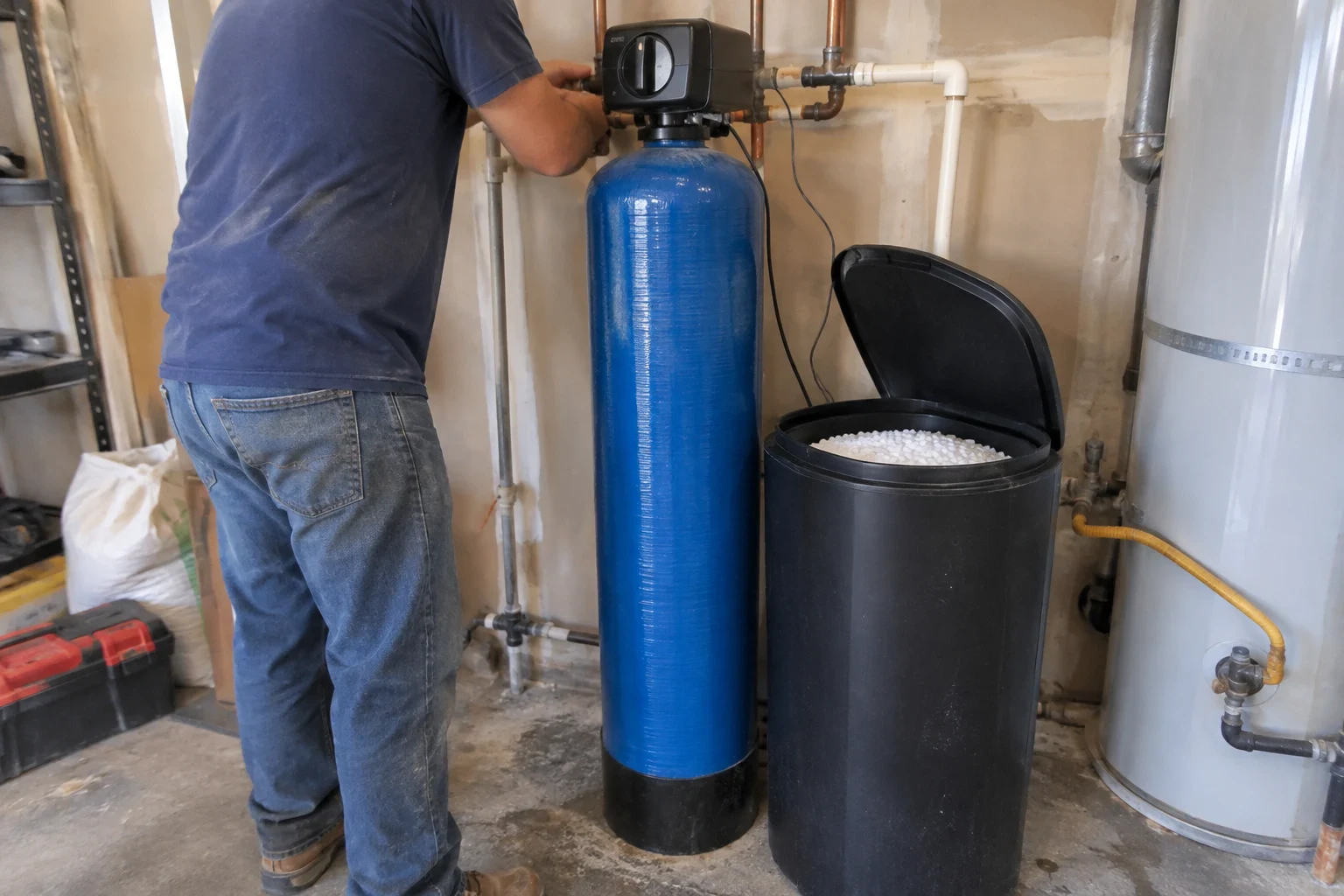
A water softener pulls calcium and magnesium out of your water. Those are the minerals that leave crust on fixtures and build scale inside your water heater and pipes. The softener traps them in a tank of resin beads, then rinses the beads clean with salt brine from a second tank.
It's a good tool for one problem. It won't fix a chlorine smell, and it won't clear up heavy iron stains on its own. So we check what's actually in your water before we talk equipment. If the test says hard water, we size a softener to it. If it says something else, we tell you that and point you to what fits, like whole-home filtration or reverse osmosis.
We have been in business 13 years, and we've learned that the most common softener mistake is buying one nobody needed, or one sized for a different house.
What's included with a softener from us
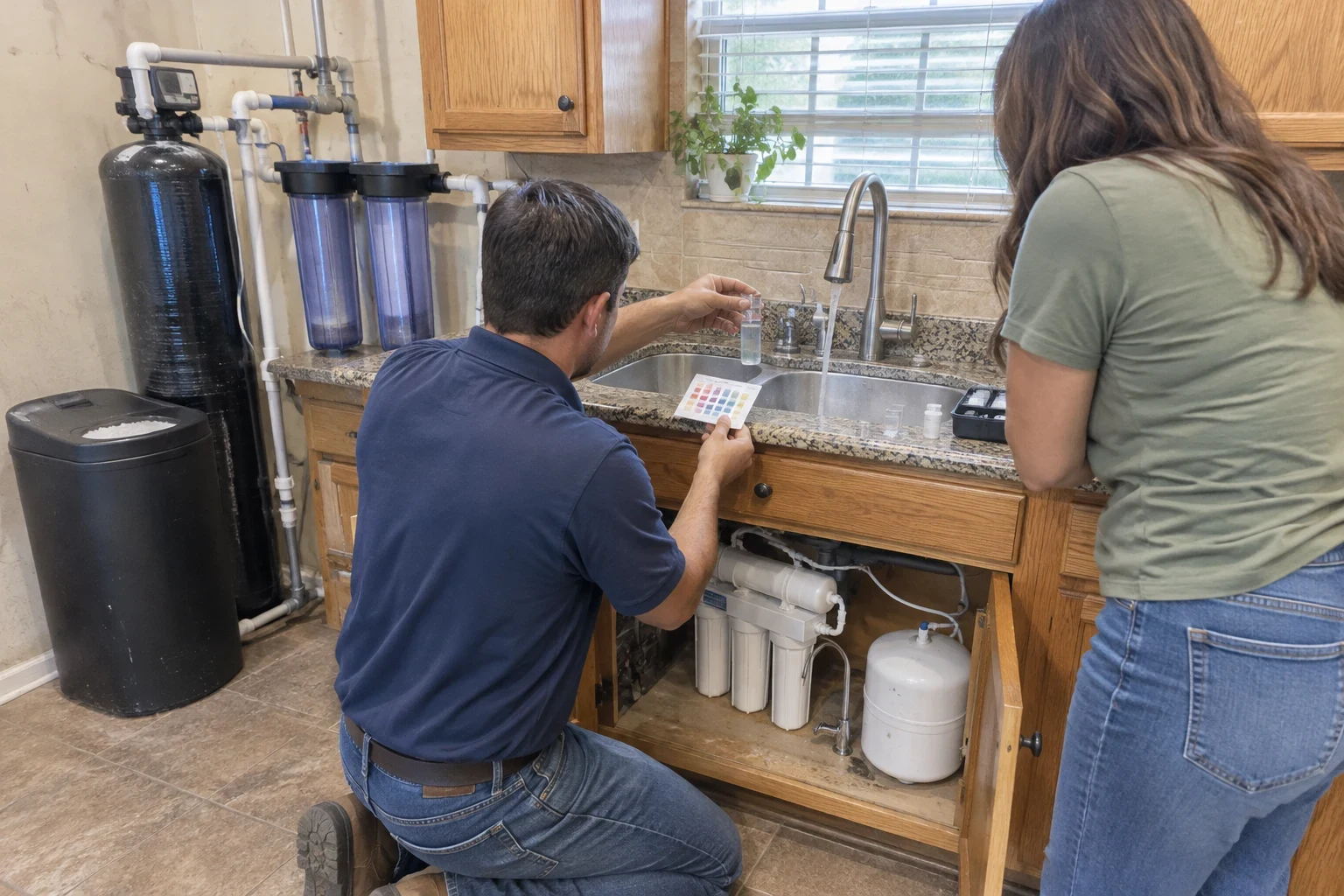
- A hardness test at your home
- Before we talk equipment, we measure hardness and check for iron. You're standing right there at the sink when the numbers come up.
- Sizing to your water and your use
- How big the softener should be depends on how hard your water is and how many people live with you. Too small and it regenerates over and over, eating salt. Too big and you paid for capacity you'll never use.
- Installation on the main line
- Installation is free. We tie the softener into your main line and add a bypass valve. Turn that one handle and water goes around the softener, so your faucets still work while it's being serviced.
- Drain and brine lines set right
- The rinse cycle has to empty into a drain with a proper air gap. We run that line so water can't back up or get pulled back into the system.
- Settings and a salt walk-through
- We set the valve for your hardness, then show you where the salt goes and how to tell when it's low. It takes about ten minutes.
- Service after the sale
- Full service after the sale is part of the deal, and a lifetime warranty covers the system. Down the road, if it doesn't seem right, the crew that installed it is the crew that comes back.
Signs your home may need a softener
White crust on faucets and showerheads
That chalky ring around aerators and spray holes is mineral scale. Scrub it off and it's back within weeks.
Spots on dishes and shower glass
Glasses that come out of the dishwasher cloudy and a haze on the shower door are textbook hard water marks.
Soap that won't lather
Minerals in the water keep soap from sudsing up. You end up pouring more shampoo and laundry detergent, and your skin can feel coated after you rinse.
A water heater that pops or rumbles
Scale collects at the bottom of the tank, and the burner has to heat through that layer. The noise usually means it's working harder than it should.
Stains that aren't white
Orange or brown marks usually come from iron, not hardness. That's the reason we test first, since the fix may be something else entirely.
How a softener job goes
- 1
A phone call first
You tell us what you're seeing and where in the house. We ask a few questions about where your water comes from and how the house is set up, then pick a time to come by.
- 2
We test your water
We check hardness and iron at your tap. If the numbers don't point to a softener, we tell you that and explain what would help instead.
- 3
A clear recommendation
You get the size, the valve type and where it would sit, with the full cost written out. Take your time deciding.
- 4
Install day
Plan on a good part of the morning or afternoon. We turn off the water, tie into the main line, set both tanks and run the drain line. Then we check every joint for leaks, clean up the work area and walk you through the settings.
- 5
We check back
Once the softener has been running for a while, we can test your water again to make sure it's doing what it should.
What sets the price of a softener
Installation is free with us, so the equipment makes up most of what you pay. The right equipment comes down to what's in your water and how your house is plumbed. Before any work starts, we go over the cost with you by phone and put it in writing.
- How hard the water is, and how many use it
- A bigger family on harder water needs a softener with more capacity. Of everything on this list, that moves the number most.
- Iron or other findings
- When the test turns up iron, you may need a pre-filter or a unit designed to deal with it.
- Valve type
- A metered valve keeps count of the gallons you use and rinses the resin only when it's close to full. A basic timer valve rinses on a schedule, used or not. The metered kind costs more up front but burns through less salt over the years.
- Where your main line comes in
- A line that enters in the garage near a drain is a simple hookup. One that comes up under the slab or sits far from any drain takes more work.
Water softener questions
Something not covered here? (281) 399-4239
How do I know if I really need a softener?
The only sure way is a test. Hardness can cause spots and crust, but stains and smells usually trace back to something else. We check hardness and iron right at your home and tell you plainly what we find, even when that means you don't need one.
Will soft water taste salty?
Most people never notice. A softener trades the hardness minerals for a small amount of sodium, so harder water at the start means a little more sodium in your glass. For drinking water without it, a reverse osmosis system under the kitchen sink takes care of that.
How often will I add salt?
That comes down to your hardness and your daily water use. A good habit is to lift the lid on the brine tank every few weeks and pour in a bag when the level gets low. With a metered valve, the salt lasts longer.
Will a softener get rid of chlorine taste or iron?
No for chlorine. A softener doesn't filter it, so the taste stays. It can manage light iron, but higher levels need separate treatment. If your results show hardness plus other problems, we may set the softener up alongside whole-home filtration.
What happens if something goes wrong later?
Give us a call. Full service after the sale is part of what we offer, and your system carries a lifetime warranty. We'll come out, track down what's causing it and make the repair.
Find out if a softener is the right fix
Tell us what you're seeing on your faucets, glasses or water heater. We'll set up a time to test your water and go from there.